

30 October 2024
| Share via
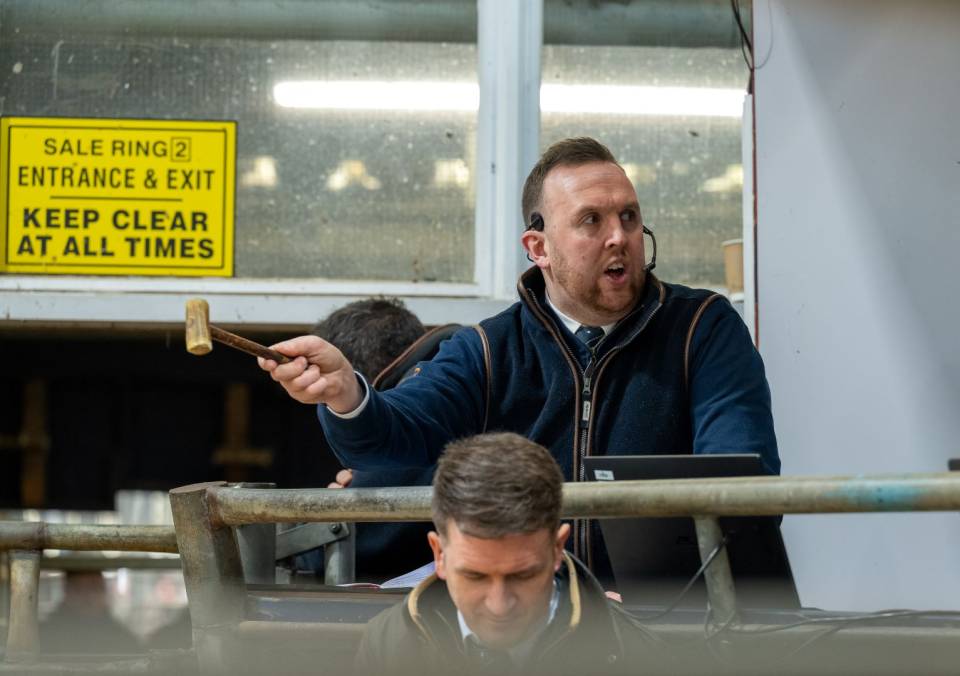
Harrison & Hetherington Senior Auctioneer, James Little, suggests that UK livestock producers selling lambs are perfectly positioned to serve the huge and growing market for Halal meat in the UK and beyond.
James comments, “The Halal market is paramount to the British sheep industry and is very much one of the driving forces behind its more recent success, particularly live market selling. A few years back deadweight marketing was taking hold of the market , however the growing demand from Halal abattoirs and their unwavering support of the live ring have seen a sharp swing back to live ring selling, where pricing structures are very much focused on the quality and finish of the animal, without the need for many of the schemes forced on us by supermarkets , many of which have now abandoned British produce in favour of cheaper poorer quality imported meat to fill the shrinking lamb sections we see on their shelves.”
There are nearly four million Muslims living in the UK today. That’s just 6.5% of our total population, but this minority accounts for over 20% of the lamb available in the UK, and the Muslim consumption of all meat sold in the UK is growing. Over 60% of Muslims consume lamb weekly compared to just 6% of the general population, and over 90% of UK produced mutton ends up in the Halal sector.
Overall, the British consumption of meat has been declining drastically over recent decades. From 1980 to 2022, the UK has reduced its consumption of red meat by 62%, and in 2021-2022 we ate less meat than in any year since the 1970s.
In contrast, a recent report from The UK Muslims Committee Federation published estimated accounts for 2022 showing that 62% of lamb, mutton, beef and chicken sold in the UK was consumed by Muslims.
In the aftermath of Brexit four years ago, the sheep farming sector of our agricultural industry braced itself for the loss of the European markets that accounted for the biggest proportion of our sales of sheep and lambs. There was talk of mountains of unwanted lamb and failure of sheep farmers with nowhere else to sell.
The reality is that demand for our sheep and lamb in Europe has remained strong, despite the rise in values, and the cost and paperwork now required for European buyers to import our high quality meat across the Channel.
But that demand is not the reason our sheep trade has been booming, and neither is the success of QMS and AHDB to re-open old export markets like Hong Kong, Japan and Canada. It is the Halal market that has filled the gap, and our Muslim communities here in the UK are keeping our sheep farmers going and growing.
The Islamic festival of Ramadan runs according to Lunar calendar for approx. 30 days, this year the festival will be practised in March. Muslims fast throughout the day and end it every night with a ‘feast’ which will almost invariably involve lamb. The Qurbani (sacrificing of an animal) festival will be in June, over a 3-day period where the Muslim community sacrifice, slaughter and donate meat to the less fortunate.
These two festivals have become increasingly important to the timing of lamb marketing, especially when they land in the spring, but the key to the Muslim market is the willingness of UK farmers and food processors to make sure their meat is Halal, or permissible under Islamic law.
Muslims have strict rules governing the food they can eat, and in the case of lamb – or any other meat apart from totally forbidden pork – for the meat to be Halal it must be raised and slaughtered to standards laid down in the Islamic guidelines set out in the Quran.
To be certified as Halal, animals must be treated with compassion and kindness. They must be raised as humanely as possible, and they must be slaughtered as painlessly as possible, with the blessing of Allah. British livestock farming has set the highest standards in the world for the welfare of the animals we raise for food. So our sheep and lambs already qualify with flying colours on those grounds. They more than qualify on grounds of quality too, and after some compromises on both sides of the fence, a very high proportion of our mutton and lamb passes the Halal test in the way it is slaughtered.
Strictly speaking, traditional Halal rules require animals to be slaughtered unstunned, with their heads pointing towards Mecca, and their life ended with minimum pain and stress. Today, the Islamic authorities in the UK permit stunning, and the food processors comply with every aspect of the Halal code.
Today, 72% of sheep slaughtered in England and Wales follow the Halal process. That’s how fundamentally important this market is to the British livestock industry, and particularly to our sheep farmers whose livelihoods increasingly depend on it.



© Copyright 2026 Harrison & Hetherington | Privacy Policy | New Customer Account | Conditions of Sale | All Rights Reserved

