

18 March 2025
| Share via
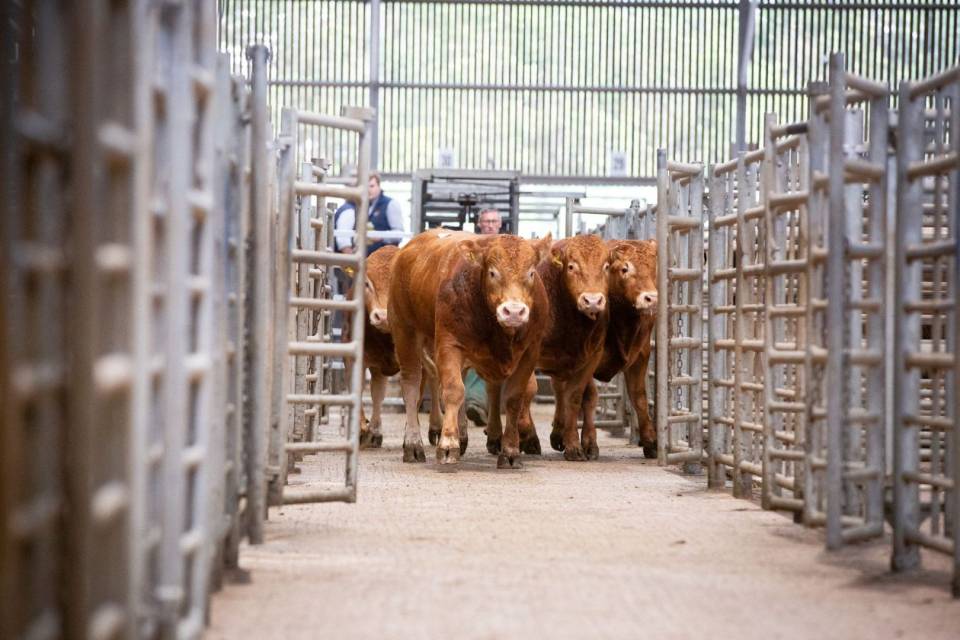
Livestock values have reached levels that many farmers never anticipated, with cattle prices climbing to new heights on almost a daily basis. While these soaring prices bring significant returns for farmers selling livestock, it raises a critical question: where do we go from here, and how sustainable is this trend in the short and long term?
The major retailers may be able to balance the books by price rises on other commodities, but how long can they sustain this until the consumer pays the price?
In the immediate future, the global livestock market remains strong, but many experts believe we are approaching a ceiling. Farmers who purchased store cattle to feed through 2024 are now reaping the benefits, selling animals at prices well beyond their expectations. However, replacing those cattle comes at a steep cost – around 30% higher than last year. This creates a dilemma: is there enough capital to sustain these rising costs, and will farmers be willing to take the risk of reinvesting?
In the sheep sector, I would expect prices to remain fairly static, and perhaps not even reach the peaks of last year. Perhaps, with the exception towards the end of spring and during religious periods like Easter, Ramadan and Qurbani, a dramatic rise is not guaranteed.
Pedigree stock is also coming under pressure. With a reduction in the number of suckler cows and sheep, less pedigree stock will be needed, so I believe that only the very best pedigree animals will achieve the prices they deserve, and they perhaps should.
Pedigree producers should not be keeping any substandard pedigree animals. Commercial markets are setting the tone, so for viability producers need to be aware of what they can get on the commercial market when selecting what to keep for Society Sales .
Weather, as always, will play a significant role, particularly during lambing season and in managing input costs. A mild spring so far has been welcomed, but the unpredictability of weather patterns remains, as always, a challenge for farmers.
Looking further ahead, several key issues emerge. One major challenge is the decreasing number of livestock across the industry. If this trend continues, it may not matter how high prices rise – there simply won’t be enough animals to meet demand. This calls for a reassessment of efficiency and a potential restructuring of farming operations to maintain sustainability.
Disappointingly, our political leaders appear completely oblivious to food inflation as they continue to drive an environmentally focussed agri policy that favours pulling good land out of production to create wilderness, and at the same time incentivising renewable energy sources, turning prime livestock rearing and fertile arable ground into solar farms. All this at the risk of destroying the only remaining Great British industry, farming and food production.
Whatever the political landscape looks like going forward, farmers will need to prioritise efficiency, genetics, and growth rates to ensure that every animal plays its part in a streamlined production system. For example, farmers will increasingly focus on faster-growing, earlier-finishing sheep and cattle to maximise profitability. As is already happening in the pig industry, advances in technology, such as facial recognition and artificial intelligence (AI), will revolutionise livestock assessment, with computers scanning animals to predict meat yields more accurately than ever before. Data-driven decision-making will very possibly become the norm, replacing some of the expertise traditionally held by stockmen.
Yet, even as technology plays a more prominent role, human relationships and face-to-face interactions will remain crucial.
At all of our H&H auction centres across Cumbria and the surrounding counties we will continue to provide community hubs where farmers and auctioneers work together to secure the best returns. As a company, we are aware of the importance of supporting farmers through these challenging times, and our aim is to ensure that we continue to provide excellent service and that we stay connected with our customers.
Government interventions, particularly linked to the recent SFI (Sustainable Farming Incentive) announcements, pose additional challenges. With a reduction in payments and increased demands for environmental measures, farmers are navigating an uncertain future. These policy changes will require farmers to adapt their practices and potentially restructure their businesses to ensure compliance while maintaining profitability.
On another note, I want to highlight that the need for young people in our farming industry must not be underestimated, because without this generation taking up the mantle, farming is at risk. H&H is committed to encouraging our young farmers by promoting the value of agriculture and showing that farming can be a rewarding career with purpose and potential.
While short-term challenges exist, especially with Government interventions, reduced payments, and decreasing livestock numbers, the industry will thrive if farmers remain adaptable and focused on improving productivity.
In this evolving landscape, H&H will continue to play a pivotal role, providing farmers and the wider rural community with the support and services they need to navigate both the present challenges and the future opportunities of the livestock market.



© Copyright 2026 Harrison & Hetherington | Privacy Policy | New Customer Account | Conditions of Sale | All Rights Reserved

